The First Mercedes-Benz Car - History of an Iconic Brand
The First Mercedes-Benz Car - History of an Iconic Brand
10 min read ·
The complete history of Mercedes-Benz from Karl Benz’s first automobile to the automotive innovations that changed every car on the road today.
The First Mercedes-Benz Car: History of an Iconic Brand
The Mercedes-Benz history is about engineers who built something that didn't exist, tested it when failure meant injury, and changed how humans move through the world. More importantly, it's about innovations that became industry standard — technologies now in every vehicle globally.
1886: The Patent That Started Everything
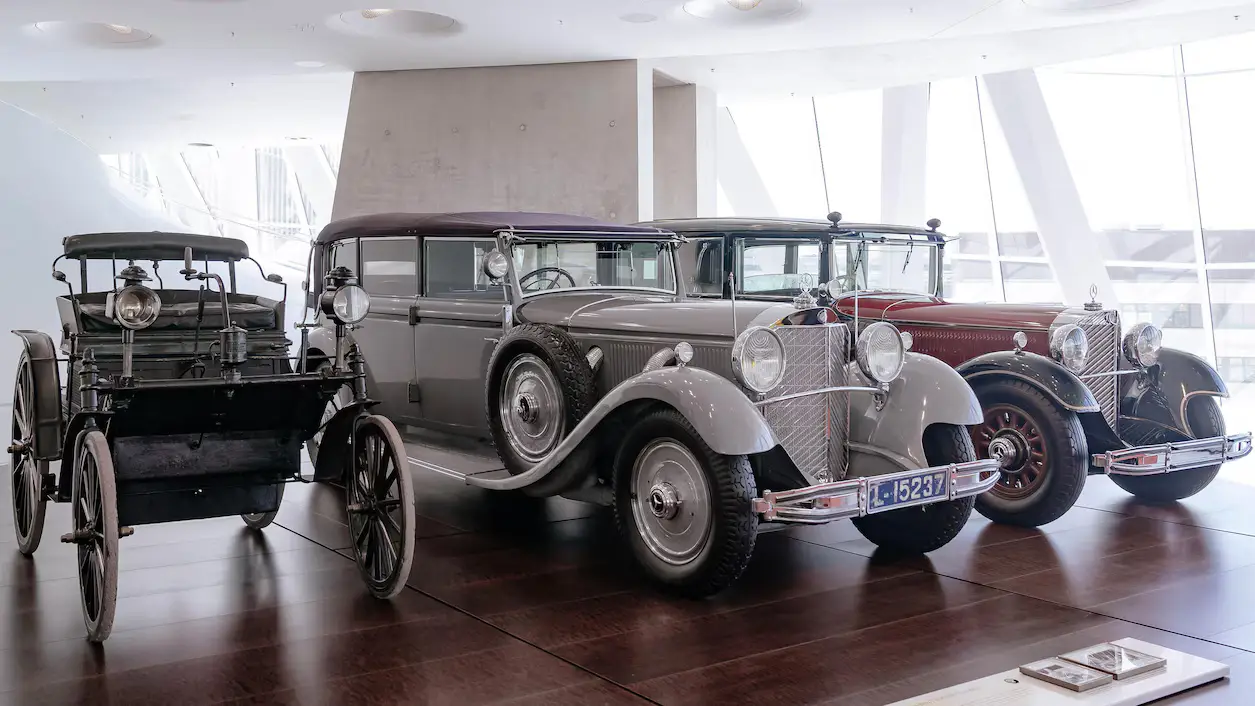
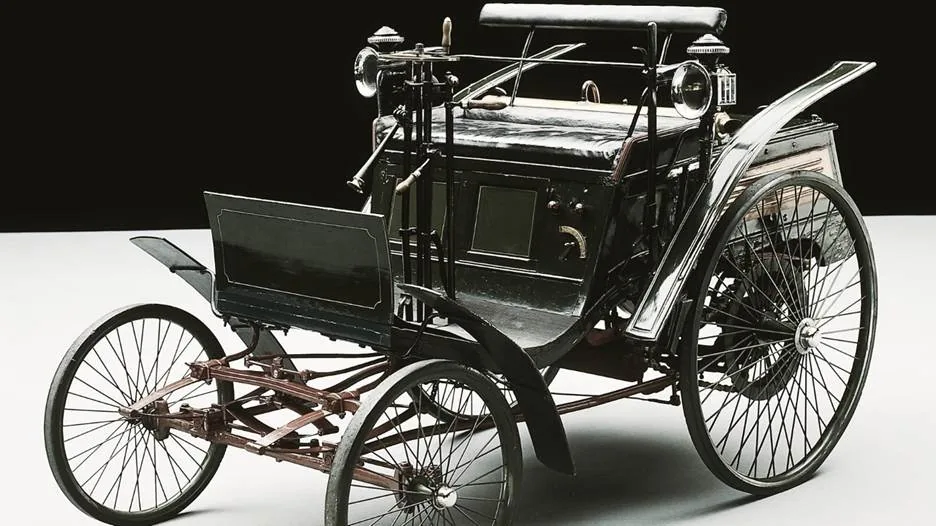
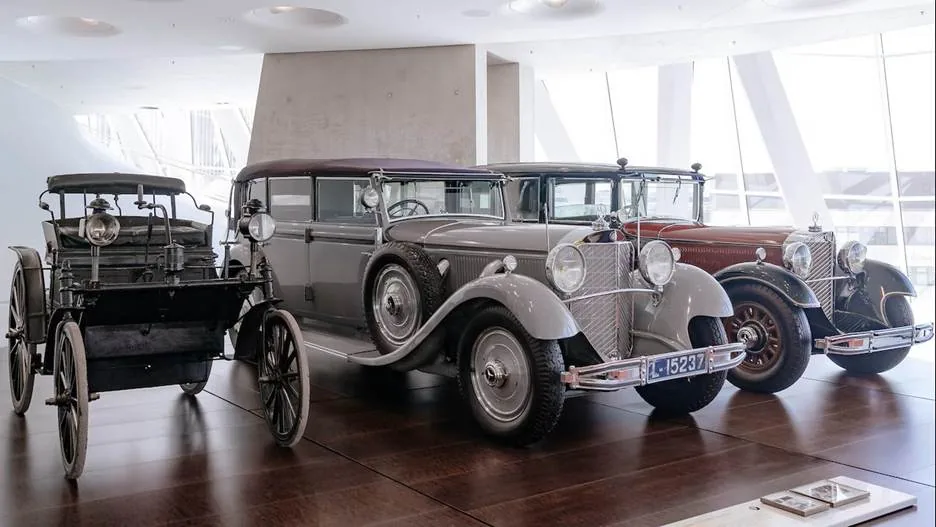
January 29, 1886: Karl Benz filed patent number 37435 for his Patent-Motorwagen. The birth of the automobile.
Not the first engine — those existed for decades. Not the first carriage — those existed for centuries. The first vehicle designed from the ground up to be powered by an internal combustion engine.
Specifications:
Maximum speed: 16 km/h (10 mph) | Engine: Single-cylinder four-stroke | Power: 0.75 HP | Weight: ~265 kg | Wheels: Three (one front, two rear) | Fuel: Ligroin
No roof, no doors, no windshield. Seated two people. Engine mounted horizontally at the rear. Steering via tiller like a boat.
Critical innovation: reliable movement using principles defining automotive engineering for the next century: internal combustion, four-stroke cycle, electric ignition, differential gearing, evaporative cooling.
It worked.
1888: The First Long-Distance Journey
August 1888: Bertha Benz, Karl's wife, took the Patent-Motorwagen on a 106 km journey from Mannheim to Pforzheim with their sons. First long-distance automobile journey in history.
She didn't tell Karl. He would have objected — the vehicle wasn't ready.
Problems encountered and solved:
Fuel chain broke → Fixed with a garter
Ignition wire short-circuited → Insulated with a hat pin
Brakes wore down → Local cobbler installed leather pads, inventing brake lining
Fuel line clogged → Cleared with hat pin
Ran out of fuel → Bought ligroin from pharmacy (first gas station)
They arrived. The car worked over a distance. Journey proved automobiles were practical, not laboratory curiosities.
1900: The Name "Mercedes"
Gottlieb Daimler and Wilhelm Maybach built engines; Karl Benz built complete vehicles. They competed in the same industry, same country, without knowing they would merge.
Emil Jellinek, Austrian entrepreneur and racing enthusiast, ordered custom vehicles from Daimler-Motoren-Gesellschaft. Specified high performance, modern design, and powerful engines. Sold them under pseudonym to protect business identity.
The pseudonym: Mercedes. His daughter's name.
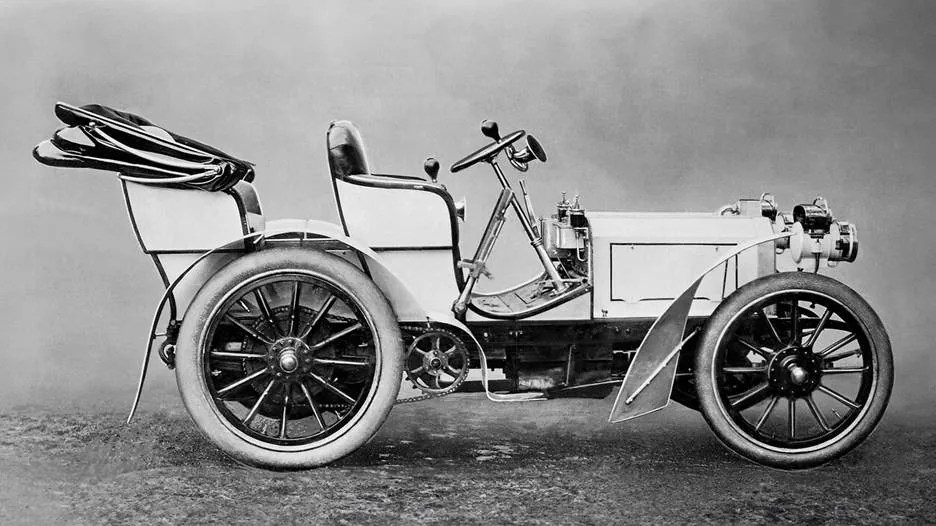
1900 Mercedes 35 PS:
Engine: 35 horsepower | Top speed: 85 km/h (53 mph) | Weight: 1,200 kg | Transmission: 4-speed
Complete redesign: lower center of gravity, longer wheelbase, pressed steel frame, honeycomb radiator. Mercedes 35 PS defined what automobiles would become: powerful, fast, stable, controllable.
1926: The Merger
Benz & Cie and Daimler-Motoren-Gesellschaft merged on June 28, 1926. Two competitors became Daimler-Benz AG. Brand: Mercedes-Benz.
Merger motivated by economics: Post-WWI German inflation | Limited market for expensive vehicles | Overlapping engineering efforts | Combining resources made survival possible
Three-pointed star (Daimler) and laurel wreath (Benz) combined into one logo. Engineering philosophies merged: Benz's precision with Daimler's performance focus.
What Mercedes-Benz Gave the Automotive Industry
Mercedes-Benz didn't just make cars. They invented technologies that became mandatory in every vehicle globally. When you drive any car today, you're using Mercedes inventions.
Safety Innovations That Saved Millions
1951: Safety Passenger Cell
Béla Barényi designed crumple zones: a rigid passenger compartment surrounded by deformable front and rear sections. Energy from the collision is absorbed by the crumple zones, not humans inside.
1959: Patent granted | Now standard in every vehicle globally
Impact: Reduced fatalities in frontal collisions by 40-50%
1978: ABS (Anti-lock Braking System)
Mercedes-Benz S-Class (W116) was the first production car with electronic ABS. Prevented wheel lock during braking, maintained steering control.
Previous: Locked wheels = no steering control | Car skids straight into obstacle
After: ABS allows steering during emergency braking | Driver can steer around an obstacle while braking
Impact: Reduced accidents by 18% in wet conditions | Now mandatory in the EU (since 2004) and the US (since 2013)
1981: Airbags
S-Class first with driver and passenger airbags standard. Not optional equipment — standard.
Previous: Seatbelts only | Head and chest impact with steering wheel common in frontal collisions
After: Airbag deploys in 30 milliseconds | Cushions head and chest impact
Impact: Reduces fatality risk in frontal collisions by 29% (NHTSA data)
1995: ESP (Electronic Stability Program)
Mercedes developed with Bosch. Detects loss of traction, applies brakes to individual wheels, and prevents spin-out.
Impact: Reduces fatal single-vehicle crashes by 49% | Reduces fatal multiple-vehicle crashes by 20% (IIHS data) | Now mandatory in EU (since 2014) and US (since 2012)
1998: BAS (Brake Assist System)
Detects emergency braking (driver hits brakes quickly but not hard enough). The system applies maximum braking force automatically.
Impact: Reduces stopping distance by up to 45% in emergency situations
2002: PRE-SAFE System
The first system to prepare a vehicle for an imminent collision before it happens. Tightens seatbelts, adjusts seat positions, closes windows and sunroof.
Impact: Pioneered predictive safety | Concept now used by most manufacturers
Performance & Efficiency Innovations
1936: First Diesel Passenger Car
Mercedes-Benz 260 D: First diesel engine in production passenger car. Previously, diesel only used in trucks and buses.
Impact: Diesel engines are 20-40% more fuel efficient than gasoline | Enabled long-distance travel with fewer fuel stops
1954: Direct Fuel Injection
Mercedes-Benz 300 SL first production car with direct fuel injection. Fuel is injected directly into the combustion chamber, not into the intake manifold.
Impact: Increased power output by 15-20% | Improved fuel efficiency | Better throttle response | Now standard in virtually all modern engines
1978: First Production Turbocharged Diesel
Mercedes-Benz 300 SD: First production car with a turbocharged diesel engine.
Impact: Combined diesel efficiency with performance | Made diesel viable for luxury cars
1981: Airbag System
S-Class (W126) was the first car with front airbags as standard equipment.
Impact: Changed industry approach from optional safety to standard safety
Comfort & Technology Innovations
1961: Automotive Air Conditioning
Mercedes-Benz first European manufacturer to offer factory-installed air conditioning.
Impact: Made long-distance summer driving comfortable | Now expected in 99% of vehicles
1981: 4-Matic All-Wheel Drive
Mercedes developed the first electronically-controlled all-wheel drive system for passenger cars.
Impact: Enabled luxury car performance in adverse weather
1995: Tele Aid System
First integrated telematics system for emergency calls and roadside assistance.
Impact: Pioneered connected car technology | Emergency call systems now mandatory in the EU (eCall since 2018)
2013: Attention Assist
Detects driver drowsiness through steering patterns. Warns driver to take a break.
Impact: Reduces fatigue-related accidents | Many manufacturers now offer similar systems
Engineering Milestones Timeline
1886: Karl Benz invents the automobile
1888: Bertha Benz proves long-distance travel possible
1900: Mercedes 35 PS defines modern automobile design
1926: Merger creates Mercedes-Benz
1936: First diesel passenger car (260 D)
1951: Crumple zone patent
1954: First fuel injection (300 SL Gullwing)
1959: Crumple zone patent granted
1978: First production ABS (S-Class W116)
1978: First turbocharged diesel (300 SD)
1981: First standard airbags (S-Class W126)
1995: First ESP (S-Class W140)
1998: First brake assist system
2002: First PRE-SAFE system
2013: Attention Assist
Modern Mercedes-Benz
Current Model Range
S-Class
Flagship sedan. Technology showcase: innovations appear here first, filter down to other models later.
Current generation (2021+): MBUX Hyperscreen (56-inch curved display) | Rear-wheel steering | E-Active Body Control suspension | Level 3 autonomous driving capable
G-Class (G-Wagon)
Off-road SUV originally designed for military use (1979). Became luxury icon despite boxy design unchanged for decades.
Current version: Refined interior | Same exterior design since 1979 | Ladder frame construction | Three locking differentials | Off-road capability, few luxury SUVs match
E-Class
Executive sedan and wagon. Balance of technology, comfort, performance.
Most popular Mercedes globally: Over 14 million sold since 1953
AMG Models
Started as an independent tuning company (1967), became Mercedes-AMG in 1999. Performance versions of standard models.
AMG innovations: Hand-built engines ("One Man, One Engine" philosophy) | Distinctive exhaust sound | Enhanced performance without sacrificing daily usability
EQ Series
Electric vehicles represent Mercedes future.
EQS: Electric S-Class | Range up to 770 km
EQE: Electric E-Class | Range up to 660 km
EQC: Electric SUV
Technology: MBUX Hyperscreen optional | Over-the-air updates | Fast charging (10-80% in 31 minutes)
Mercedes-Benz in Serbia
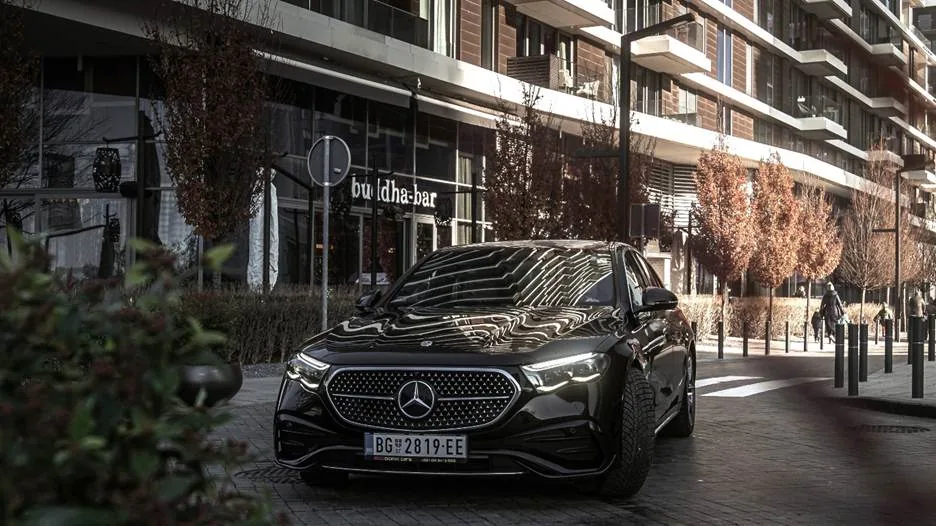
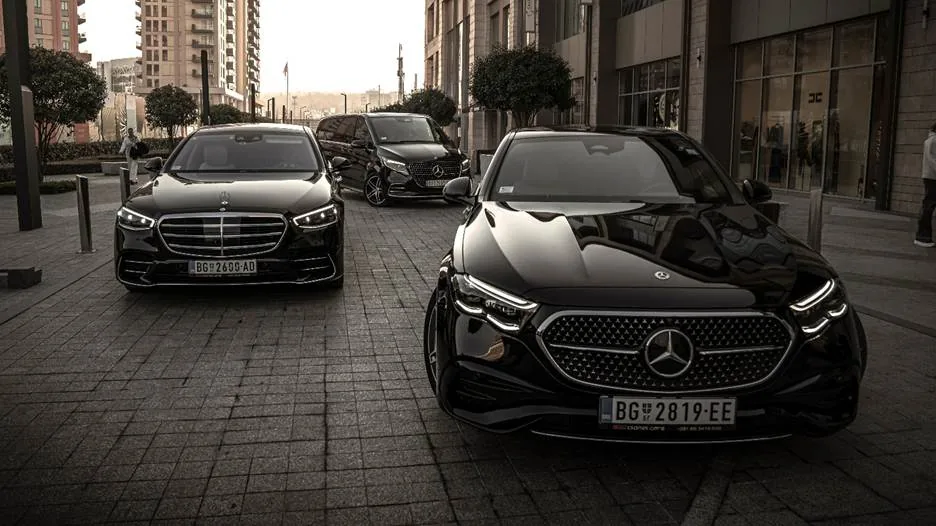
Mercedes-Benz vehicles are available through official dealers and premium rental services. S-Class and E-Class are popular for business transport. G-Class is gaining a growing presence in the luxury market.
BG Diplomat fleet:
The Mercedes S-Class represents flagship executive transport, combining cutting-edge technology with uncompromising luxury.
The Mercedes V-Class accommodates 6-7 passengers in luxury comfort, making it ideal for group travel, including airport transfers, day trips, and corporate events requiring elegant group transport.
Experience Mercedes off-road heritage: the Mercedes G-Class continues military-proven capability in civilian luxury form, unchanged in iconic design since 1979.
For the electric future, the Mercedes EQG brings G-Class capability into the zero-emission era, maintaining legendary off-road performance with modern powertrain.
The Mercedes EQS represents 138 years of innovation evolving into electric flagship luxury, proving that sustainability enhances rather than compromises performance.
Professional chauffeur service, not just rental. Drivers trained on Mercedes systems understand vehicle capabilities. Vehicles are maintained to factory specifications.
Not nostalgia or brand loyalty. Mercedes-Benz defined what automobile engineering means.
Innovations that became industry standard:
Crumple zones: Every car has them
ABS: Every car has it (mandatory)
Airbags: Every car has them (mandatory)
ESP: Every car has it (mandatory)
Fuel injection: Every car has it
Diesel passenger cars: Mercedes made them viable
The three-pointed star means something specific: engineering first, marketing second. When Mercedes introduces technology, it works. Might not be first (Apple approach), but it's reliable.
Current vehicles carry that heritage:
S-Class testing ground for technology appearing in economy cars 5 years later
G-Class is still using body-on-frame construction, which everyone else abandoned for better on-road handling
AMG models maintain naturally aspirated engines when the industry moved to turbochargers (though now also using turbos for efficiency)
Safety record: 0 fatalities in accidents where all occupants wore seatbelts in S-Class (claim from the 1990s, still referenced)
Frequently Asked Questions
What was the first Mercedes-Benz car?
Karl Benz's 1886 Patent-Motorwagen was the first automobile. The name "Mercedes" first appeared on the 1900 Mercedes 35 PS. The Mercedes-Benz brand was formed in 1926 when Benz & Cie and Daimler-Motoren-Gesellschaft merged.
Why is it called Mercedes-Benz?
"Mercedes" came from Emil Jellinek's daughter's name, used as a pseudonym when selling high-performance Daimler vehicles. "Benz" from Karl Benz, inventor of the automobile. Combined when the companies merged in 1926.
What does the Mercedes three-pointed star mean?
Represents Daimler's ambition to motorise land, sea, and air. Daimler produced engines for all three applications. Each point represents one element.
What has Mercedes-Benz contributed to the automotive industry?
Crumple zones (1951), fuel injection (1954), ABS (1978), turbo diesel (1978), airbags standard (1981), ESP (1995), brake assist (1998), PRE-SAFE (2002), attention assist (2013). Most are now mandatory safety equipment in all vehicles globally.
Are Mercedes-Benz cars reliable?
Generally, yes, particularly S-Class and E-Class. German engineering prioritises durability. Maintenance costs are higher than economy brands but lower than exotic brands.
Why are Mercedes-Benz cars expensive?
Engineering development costs, safety testing, materials quality, and technology integration. Many innovations cost millions to develop, appear in Mercedes first, and become industry standards later.
From Karl Benz's 1886 workshop to modern electric vehicles, Mercedes-Benz's history shows what engineering commitment creates. Every time you use ABS, airbags, or ESP in any car, you're using Mercedes inventions. For experiencing Mercedes vehicles in Serbia, contact BG Diplomat.
With your permission, Google Analytics 4 and Google Ads measure visits and actions. Rejecting optional analytics does not affect booking. Privacy Policy